


This is part 2 of our research findings. Check out the first part of the findings here.
Our first article focused on the cultural context and engagement in evangelism. This section will focus on the findings from what is working in evangelism and from our discipleship rhythms.
As a quick reminder: this is a point-in-time snapshot of a subset of our students. We surveyed about 250 people who were present on a single Sunday.
1. Evangelism works… with non-believers.
When asking those who did not grow up in the church, we found that 61% were connected to our church through either a marketing initiative or overt evangelism. That’s huge! There can be a lot of emphasis on reaching friends or coworkers with the Gospel — and we need that! But this data shows that a substantial portion of people who are open to faith are being connected through intentional outreach efforts, probably because they didn’t already have a believer inviting them.
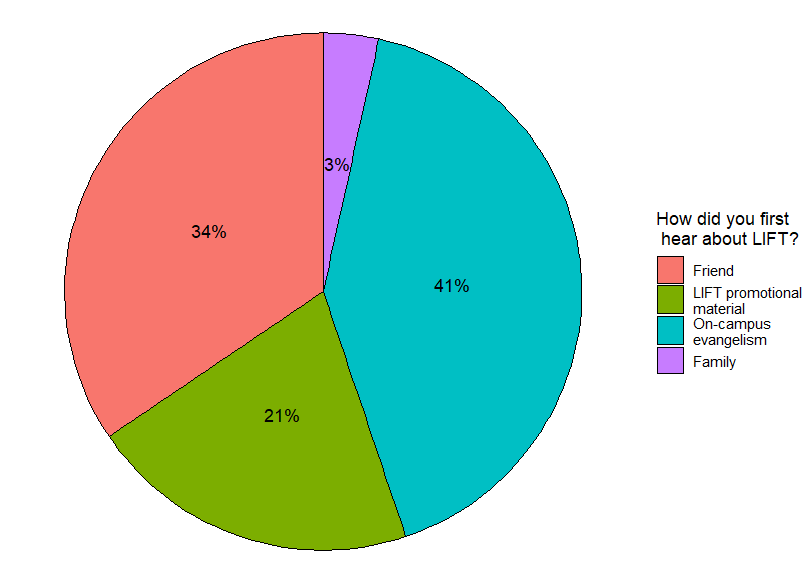
Key Learning: It is important to talk to find creative ways to reach outside of our existing social networks and provide a pathway to connect them to church life.
2. Nominal Christianity is a challenge
One of the criteria we assessed was whether or not a student grew up in the church. A particularly interesting category was those who were nominal or cultural Christians. Think “Christmas and Easter” Christians.
If you compare this chart with the previous chart, you will notice the outsized role that relationships play in engaging them in Spiritual life.
Friends are almost 2x more effective, while evangelism and marketing are only 50% as effective. In other words, it is the influence of a trusted voice that will engage these students in their faith.
Interestingly, family plays almost no role at all. If a teenager is raised in a home where church is not a priority, they are more difficult to reach at university, as our existing outreach methods are not as effective.
When starting a new church and not having a peer network to tap into, reaching these students becomes much more challenging.
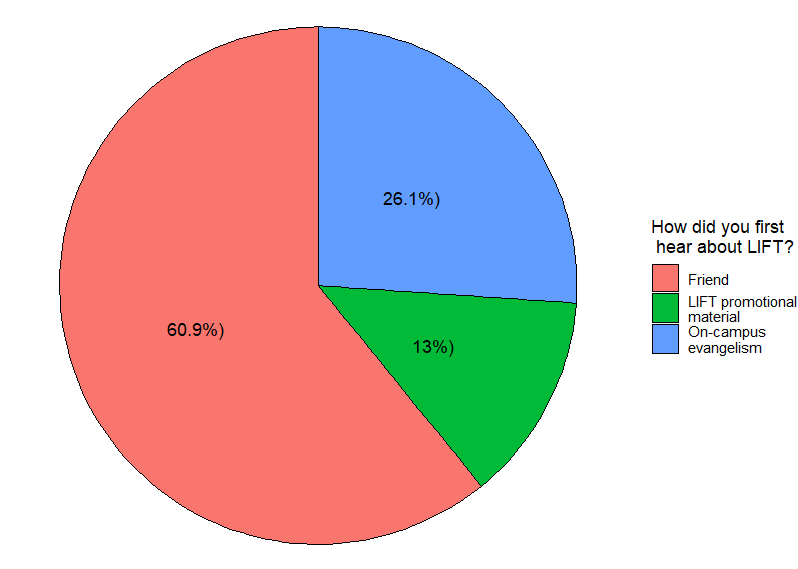
Key Learning: Students need to be exposed to a vibrant faith that places Lordship of Jesus and participating in Church life as a priority if they are going to eagerly engage in church post-high school.
3. Christian students are reached the same way as non-Christians
Looking at students who were raised in regularly attending churches, we can see that the breakdown of how they were reached is remarkably similar to that of non-Christians, except that family referrals play a more substantial role.
We can clearly see that friends are a dominant source of influence and that a mix of marketing and evangelism efforts plays a role in connecting them to church life.
This clearly shows that our outreach strategies are less about looking for a silver bullet and more about a diversified approach. A plurality of strategies are required to reach a diverse and dynamic campus.
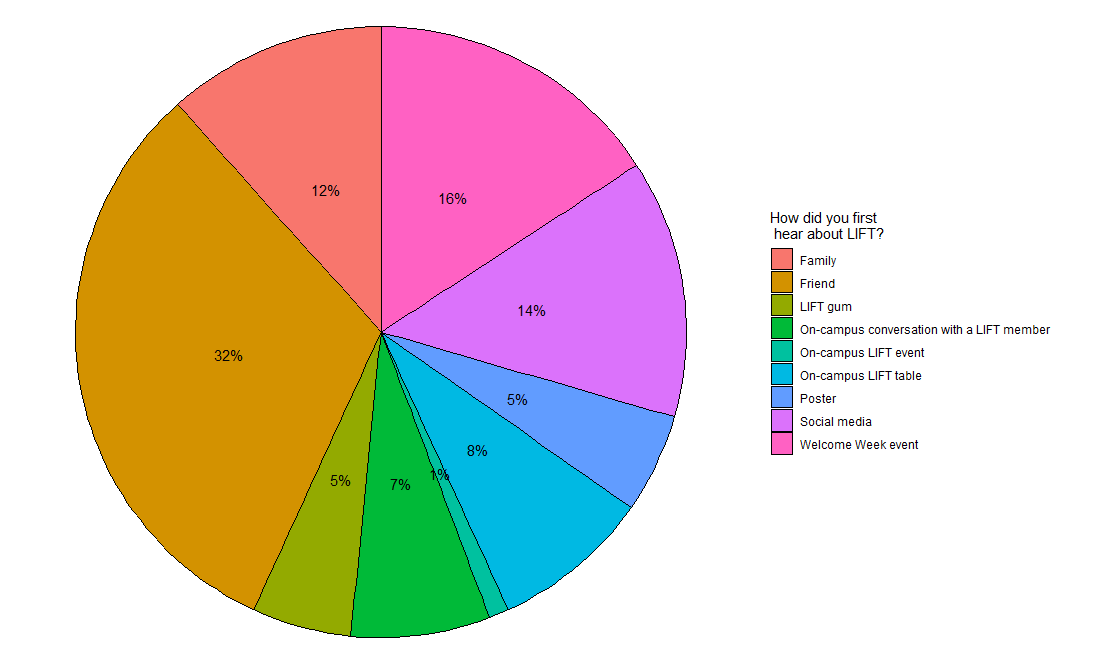
Key Learning: If we focus on effective outreach to non-Christians, we will also engage Christian students!
4. Daily Devos are awesome
I’ve said before, and I’ll say it again: our daily devotions are the single greatest discipleship tool that we have.
We have a synchronized rhythm of reading scripture together as a church family, with the entire church studying the same passage every day. We then integrate that passage of scripture into our preaching, Bible study and other rhythms.
As you can see, even for newcomers, this rhythm results in regular scripture study, averaging 3 days a week. By the end of 4 years, or an undergraduate degree, the average person is reading scripture 5 days a week! Praise God.
I cannot think of a better gift to give someone in their 20s than a well-established habit of time in the Word.
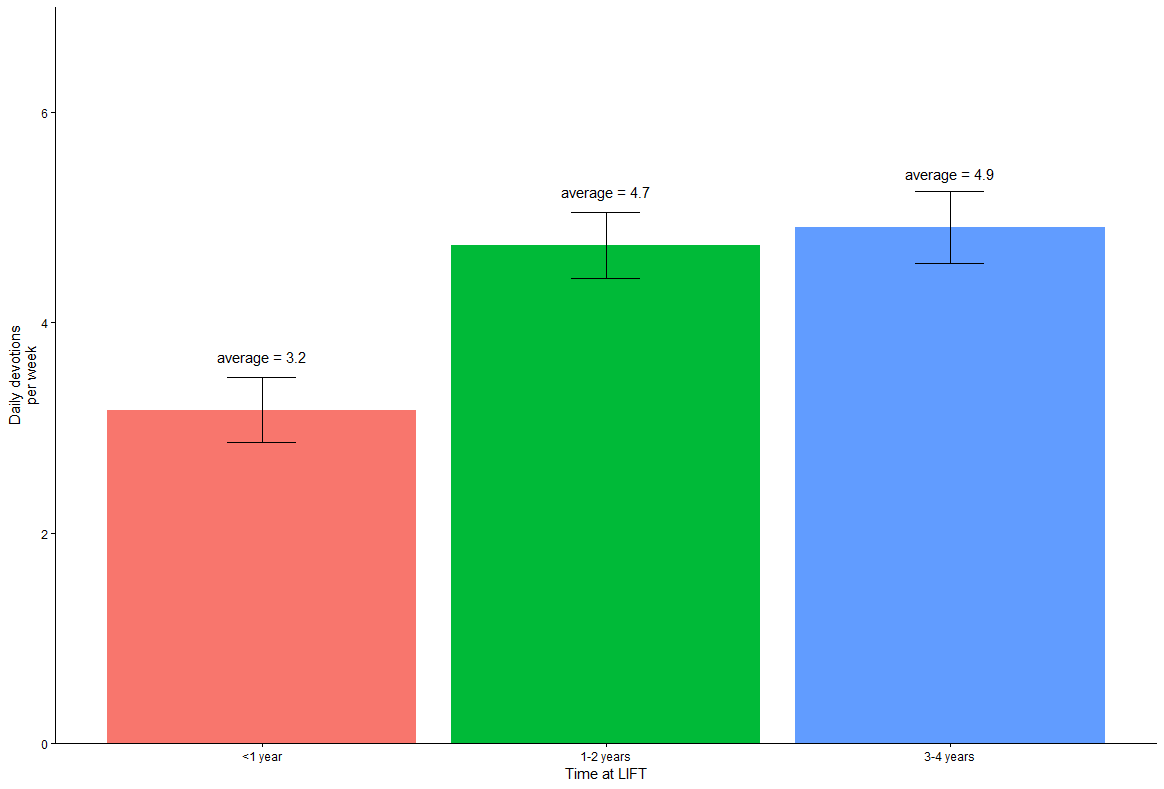
Key Learning: Making scripture study in community a priority results in people studying scripture in community!
5. As devos go, so do tithing and social media
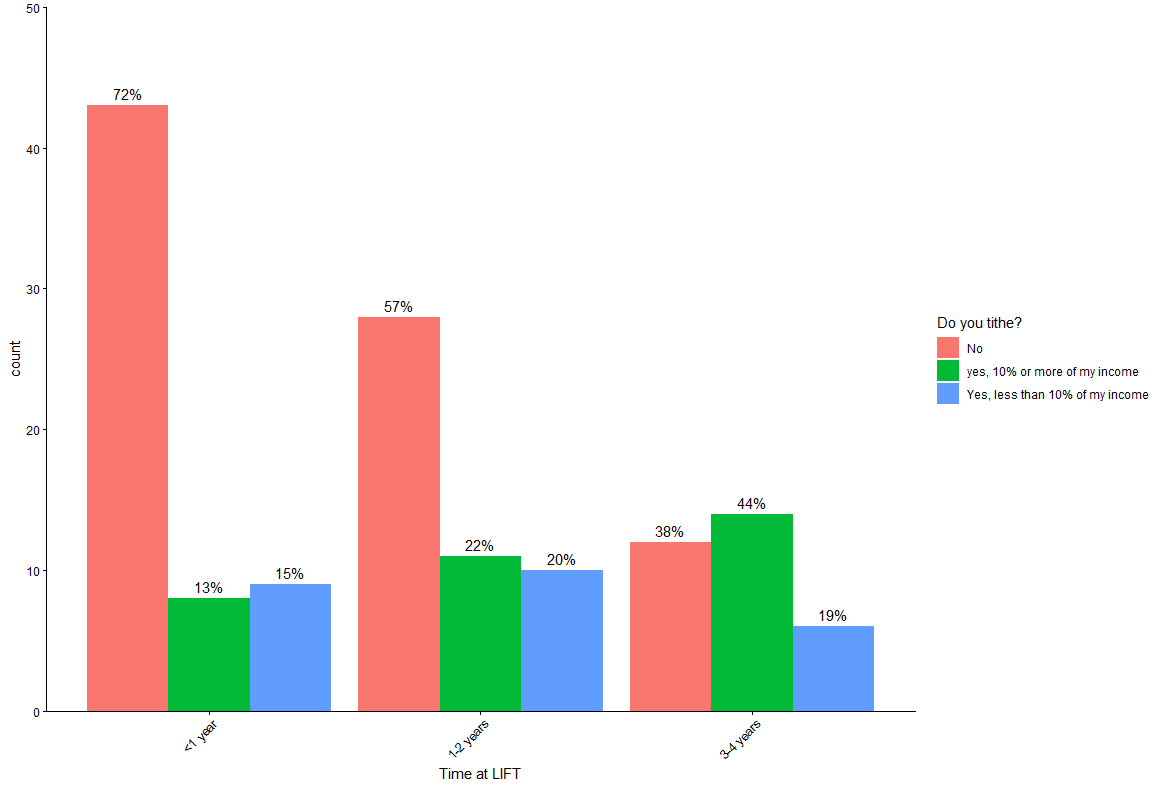
The question is, are we seeing fruitful discipleship habits formed in our disciples as they study scripture? Two of the metrics we assessed were tithing and social media use.
Tithing is a notoriously difficult discipleship principle to instill in young people, so we see it as a helpful metric of our discipleship efficacy.
The following chart shows that as students engage over time, they are learning to tithe towards their local church.
The negative effects of social media use are well documented (see Jonathan Haidt’s The Anxious Generation, for example). We would hope to see a reduction in social media use as students engage in an embodied, authentic community of Jesus followers.
The following chart shows the reduction of social media use per day in hours over time between our first years and our upper years. With our upper years using 33% less than upper years. Personally, I’d like to see this lower, but it’s still a great indicator.
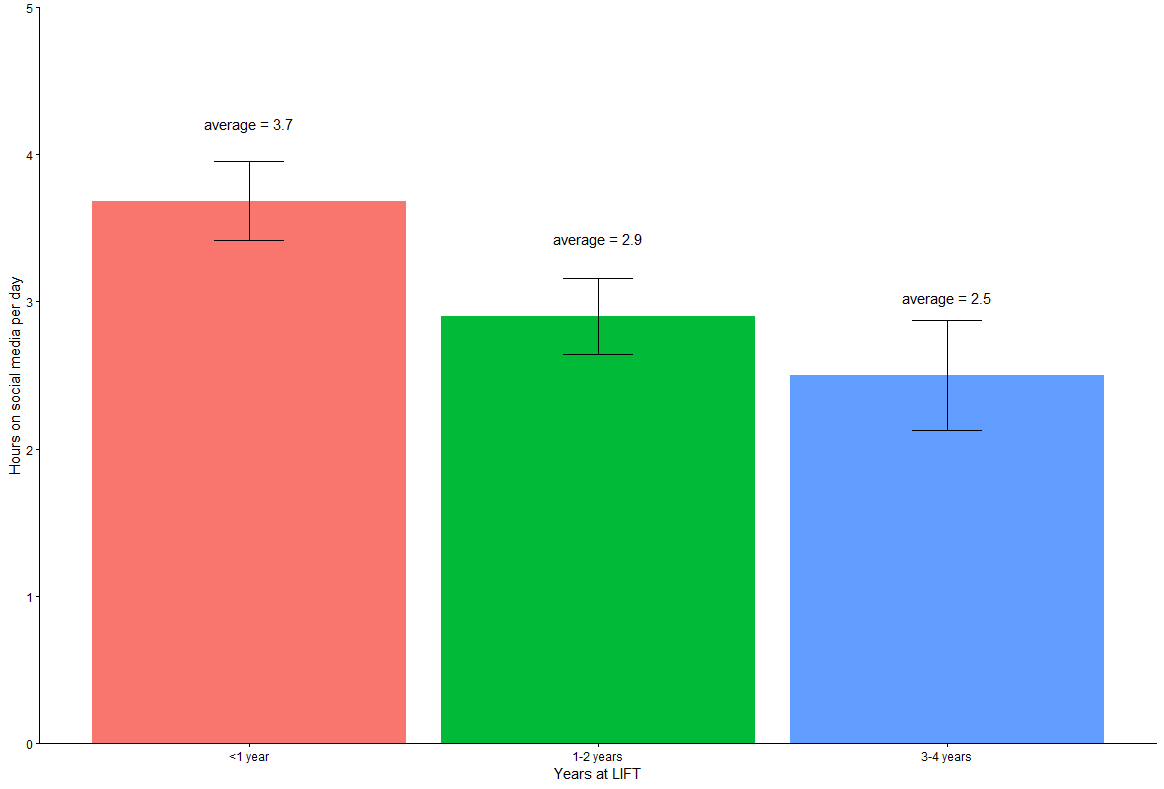
Key Learning: All of these habits (devos, tithing and social media use) are cultivated slowly and over time. With consistent communication within an integrated faith community, strong, healthy habits can be formed. However, it takes several years of consistent work to see the fruit come.
6. Mental physical and spritual health are connected
We were particularly interested in the connection between mental, spiritual and physical health within our people. Given that we are embodied creatures with mental, physical, and spiritual components to our being, we expected that an improved or worsened condition in one area would correlate with similar changes in the other areas.
That is exactly what the data shows. If a student is struggling physically, then they are more likely to be struggling mentally or spiritually.
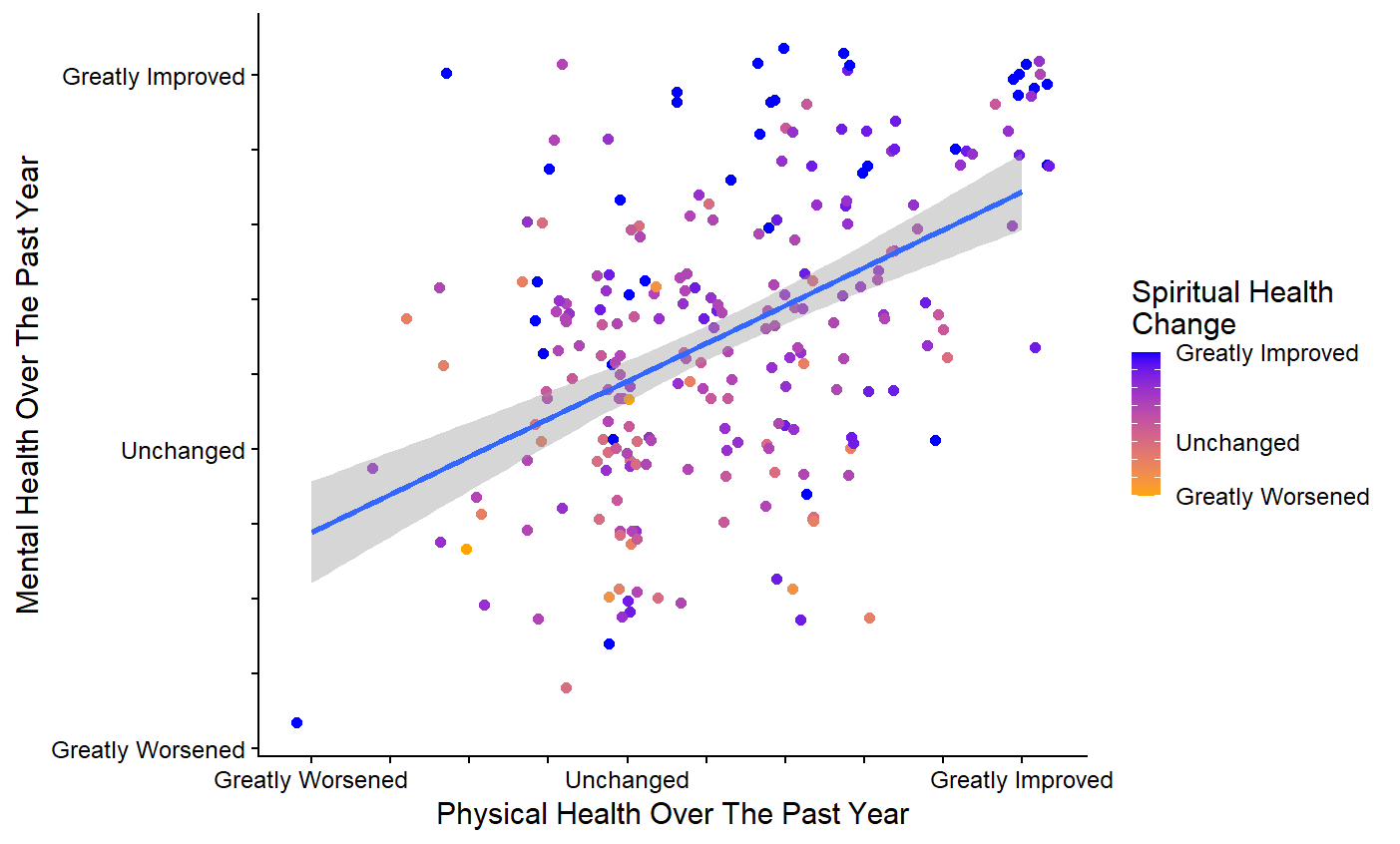
Key Learning: We are integrated humans, and we need to attend to all parts of our being as Christians, not just the spiritual dimension.
This is the beginning
This research is tremendously encouraging as it validates that the work we have done in wrestling with obedience to the scriptures in evangelism and discipleship is bearing fruit.
This was the first time that we conducted this study. There are many more dimensions we wish to explore, but they require multiple years of data to conduct comparative analysis.
We hope to do this again at the end of this year and will report back on those findings!
Note: I am indebted to the brilliant Jaden Kropf (PhD Candidate, University of Toronto) for bringing his expertise in survey design and data analysis to this work. I am also thankful to the tireless efforts of Tarrah Martin on our operations team, who coordinated the survey! Thank you to both of you!